There is a peculiar sensation that lingers long after one leaves Italy, a feeling that defies easy description yet remains etched in the memory with startling clarity. It is not merely the aftertaste of espresso or the ghost of a perfect pasta dish, but something far more profound—a sense of having touched a life more vibrant, more deeply lived. This is the essence of l’Italia che rimane, the Italy that remains. It is a country that does not simply offer itself to be seen; it demands to be felt, to be tasted, to be heard in the echo of footsteps on ancient cobblestones and the distant hum of a Vespa fading into a piazza’s dusk.
To speak of Italy is to speak of layers. It is a palimpsest of civilizations, each leaving its indelible mark upon the landscape and the soul of the people. The Etruscans, the Romans, the Byzantines, the Renaissance princes, and the modern republicans—all have contributed to a cultural tapestry so rich and complex that one can spend a lifetime unraveling its threads. This depth of history is not confined to museums; it is lived in. It is in the worn step of a cathedral that has been trodden for a millennium, in the fresco peeking from behind a modern apartment’s plaster, and in the family recipe for ragù that has been passed down through generations, each adding their own slight variation, their own story.
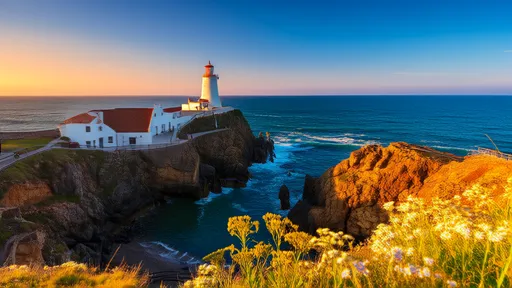
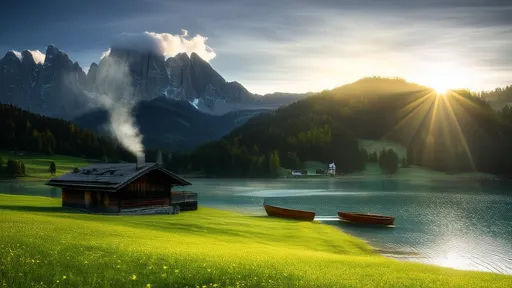
The light in Italy possesses a unique quality, a painterly glow that has captivated artists for centuries. It is a light that seems to soften edges and deepen colors, transforming the ordinary into the extraordinary. In the north, particularly in the regions of Lombardy and Veneto, the light often arrives diffused through a gentle haze, settling over the glacial lakes and the canals of Venice with a dreamlike softness. It is a light that inspired the subtle gradients of Leonardo’s sfumato. Journey south, and the light changes character. In Sicily and Puglia, the sun is assertive, almost defiant, bleaching the whitewashed walls of hilltop towns and casting sharp, dramatic shadows across the arid landscape. This is the light of Caravaggio—bold, stark, and utterly revealing.
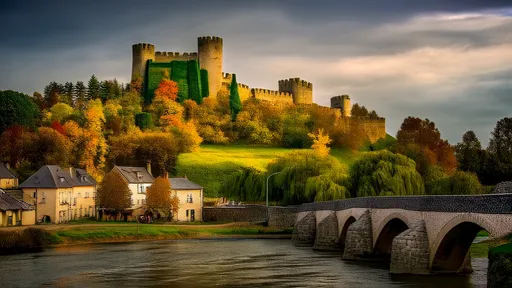
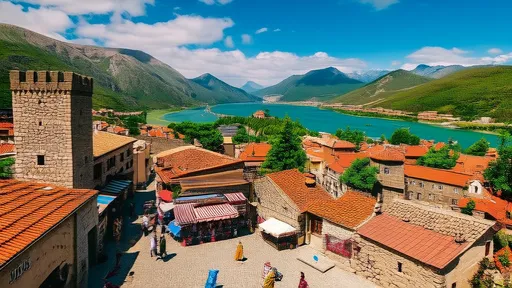
Beyond the well-trodden paths of Rome, Florence, and Venice lies another Italy, a country of countless small towns and diverse regions, each fiercely proud of its unique identity. This is where the true, beating heart of the nation is often found. In the misty hills of Le Marche, medieval villages perch precariously on ridges, their stone houses seemingly growing from the rock itself. The pace of life here is dictated by the seasons and the land. The concept of campanilismo—allegiance to one’s local bell tower—is alive and well. A person from Bergamo will speak a dialect nearly incomprehensible to a Neapolitan, and each will argue passionately for the superiority of their local cheese, their wine, their way of life. This is not a nation of a single culture, but a magnificent collection of them.
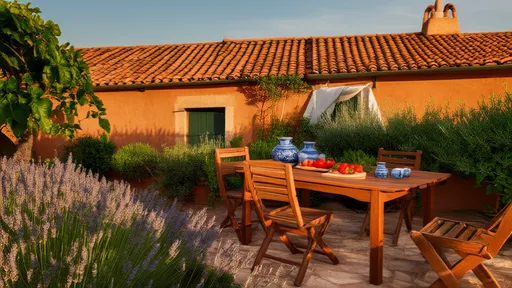
Perhaps the most enduring memory of Italy is written on the palate. Italian cuisine, in its true form, is a celebration of simplicity and quality. It is a philosophy where less is more, and the integrity of a few superb ingredients is paramount. This is a country that understands the sacredness of a meal. Lunch is not a hurried affair squeezed between meetings; it is a ritual, a time for connection and respite. To sit at a table in a trattoria in Bologna, to taste the rich, slow-cooked depth of a tagliatelle al ragù, is to understand a fundamental truth about Italian life: that pleasure and beauty are not indulgences but necessities. The first bite of a sun-warmed peach from a Sicilian market, the sharp tang of a pecorino cheese from Sardinia, the complex bitterness of an amaro sipped after dinner—these are the sensations that anchor the memory of a place.
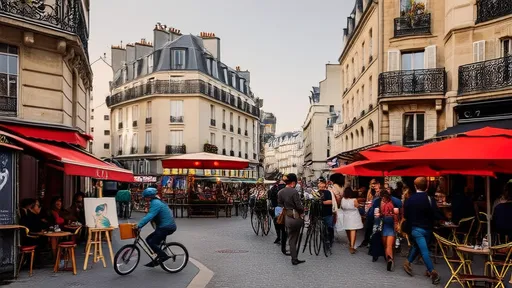
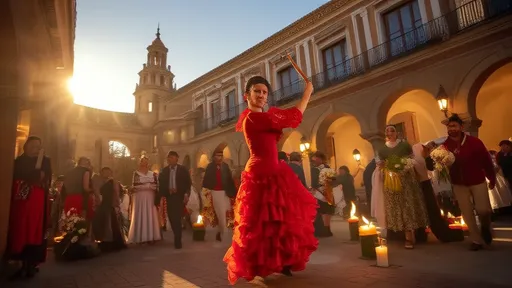
The Italian piazza is the stage upon which daily life unfolds. It is the living room, the meeting hall, and the playground of the community. From the grand, monumental spaces like Rome’s Piazza Navona to the intimate, hidden squares tucked away in the labyrinth of a small Umbrian town, each piazza has its own rhythm and character. In the early morning, the sound is of clinking cups and the gentle murmur of neighbors discussing the day’s news over a cappuccino. By evening, it transforms. Children chase soccer balls, elderly men debate politics on benches, and the air fills with the convivial noise of an aperitivo. The passeggiata, the evening stroll, is not mere walking; it is a performance of community, a way of seeing and being seen, a reaffirmation of social bonds that technology has yet to erase.
Italy is a masterclass in the art of la bella figura—literally "the beautiful figure." It is an ethos that governs everything from how one dresses to how one presents a plate of food. It is about making a good impression through grace, style, and attention to detail. This is not vanity, but a deep-seated respect for beauty and for the people around you. It is the barista who creates a perfect pattern in the foam of your cappuccino, the shopkeeper who arranges his produce like a still-life painting, and the nonna who insists on ironing a tablecloth for a simple family lunch. It is a daily commitment to adding a touch of grace to the mundane.
For all its breathtaking beauty, Italy is a country of beautiful complications. It is a place where sublime chaos and profound tradition exist in a constant, dynamic tension. The famed arte di arrangiarsi—the art of making do, of finding a creative solution—is a national sport. Bureaucracy may be byzantine, but a well-placed connection or a moment of human sympathy can untangle the most Gordian of knots. This complexity is what makes Italy endlessly fascinating. It refuses to be easily categorized or understood. It is a land of passionate contradictions: deeply Catholic yet proudly pagan in its festivals, fiercely traditional yet wildly innovative in design and fashion, maddeningly inefficient yet capable of producing works of timeless perfection.
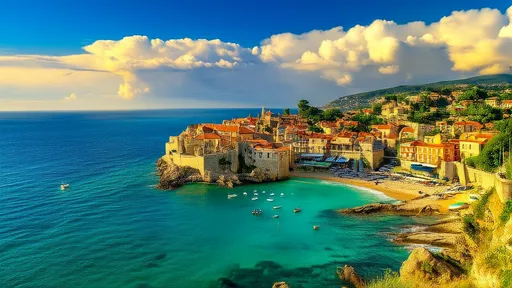
And so, the feeling of Italy that remains is not one of a single postcard image. It is a mosaic of sensations: the cool touch of marble on a hot day, the scent of citrus and salt air on the Amalfi Coast, the profound silence inside a Romanesque church, the explosive taste of a perfectly fried arancino. It is the warmth in the eyes of a stranger who offers directions not with a pointed finger, but with a story. Italy does not give up its secrets easily. It reveals itself slowly, in fragments and moments, leaving you with the undeniable sense that you have only scratched the surface. It is a feeling of incompleteness, a sweet longing to return, to understand more, to dive deeper. This is the true dolce vita—not a life of mere sweetness, but one of depth, passion, and soul-stirring beauty that, once experienced, creates an echo that never truly fades.
By /Sep 1, 2025
By /Sep 1, 2025

By /Sep 1, 2025
By /Sep 1, 2025

By /Sep 1, 2025
By /Sep 1, 2025
By /Sep 1, 2025
By /Sep 1, 2025

By /Sep 1, 2025
By /Sep 1, 2025
By /Sep 1, 2025

By /Sep 1, 2025
By /Sep 1, 2025
By /Sep 1, 2025
By /Sep 1, 2025
By /Sep 1, 2025
By /Sep 1, 2025
By /Sep 1, 2025

By /Sep 1, 2025
By /Sep 1, 2025